Shoulder pain from bike riding
Shoulder discomfort is one of the most common complaints among cyclists, whether you're a weekend rider or an endurance athlete. While many assume the pain comes from weak shoulders alone, the reality is far more complex. Your posture, bike setup, and even your feet play a decisive role in how much strain your upper body absorbs.
Below, we break down why shoulder pain appears, how lower-body mechanics influence it, and what adjustments can help you ride pain-free.
Why shoulder pain occurs in cycling
Cycling demands a stable, well-balanced position. When that balance is off, the shoulders are often the first to protest. Two main factors usually explain the discomfort:

Excessive load due to lack of central support
If your core isn’t providing enough support, your upper body compensates. This pushes too much weight into your shoulders and hands. Over time, the muscles around the shoulders and neck tighten up, leading to fatigue, stiffness, and pain.
Often, this happens without the cyclist realizing, your body simply shifts the load upward because the center isn’t doing its job.
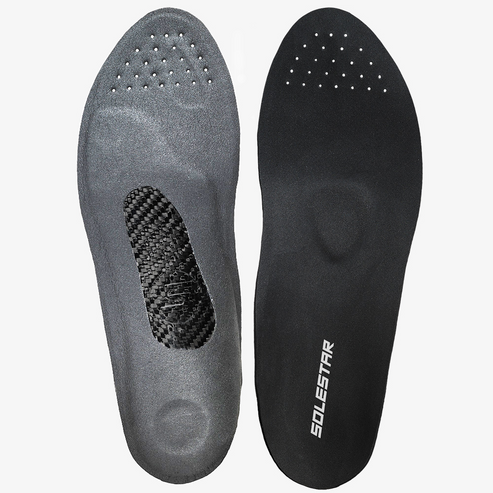
Solestar BLK Wide Insoles
The wide version of the best-selling Solestar BLK cycling insoles. Designed for maximum power transfer, support, and stability during rides. Features carbon core technology and an ergonomic shape for optimal performance and comfort.
Buy nowPostural misalignment and inefficient distribution
A saddle that’s too high, handlebars that sit too far forward, or a frame that doesn’t match your proportions can all distort your posture. When your spine and pelvis aren’t aligned, tension travels straight into the shoulder girdle.
Even small misalignments can change the way the load travels through your upper body, making your shoulders work harder than they should.

How your feet influence shoulder tension
It may sound surprising, but shoulder pain often starts at the base: your feet. The stability (or instability) happening down there has a direct impact on how your entire upper chain behaves.
The role of templates in stabilizing the upper chain
High-quality cycling insoles help keep the foot in a neutral, efficient position. When the foot collapses or rotates excessively, the knee and hip compensate, twisting your pelvic alignment. A misaligned pelvis alters your trunk posture, forcing the shoulders to maintain stability they aren’t meant to handle.
By stabilizing the foundation, insoles reduce unnecessary compensations all the way up the body.

Relationship between base of support and trunk control
Your feet form the base of support that determines how your trunk behaves.
A stable base allows the core muscles to work efficiently, which lightens the load on your shoulders.
If the base wobbles, even slightly, your torso becomes less stable, and the shoulders tense to keep everything under control. This connection is why improving foot mechanics often leads to better upper-body comfort.
Posture solutions, adjustments, and corrective exercises
To reduce shoulder pain and prevent it from coming back, consider these practical strategies:
✔️ Optimise your bike fit
Ensure your saddle height, cockpit reach, and handlebar drop match your body proportions. A professional bike fitting can make a huge difference.
✔️ Strengthen your core
Planks, anti-rotation exercises, and controlled mobility work help your trunk support more of the load so your shoulders don’t have to.
✔️ Improve foot stability
Use structured insoles to maintain a neutral foot position and avoid unwanted rotation through the knees and hips.
✔️ Mobilise the thoracic spine
A stiff upper back forces the shoulders into a poor position. Foam rolling, thoracic extensions, and gentle rotations can improve alignment.
✔️ Relax your grip
Many cyclists unknowingly ride with locked elbows and a rigid grip. Keeping the arms slightly bent, and the hands relaxed reduces tension instantly.