Tailbone pain when cycling
Experiencing discomfort in your tailbone while cycling can make even short rides unbearable. Understanding the causes and knowing how to address them is key to riding pain-free.
Common causes of tailbone pain while cycling
Tailbone pain when cycling is more common than you might think, especially for riders who spend long hours on the saddle. While it usually results from a combination of factors, there are three main causes worth knowing to help prevent it.
Direct pressure on the Sacrum
A saddle that is too hard or shaped incorrectly can put direct pressure on the tailbone, causing irritation and pain after each ride. This type of discomfort tends to get worse on long rides or when there is little cushioning.
Pelvic instability due to poor support
When the pelvis isn’t properly supported, each pedal stroke can cause micro-movements that irritate the sacral area. This often happens if one side of the saddle is lower or if the rider doesn’t distribute their weight evenly between both sit bones.

Prolonged hunched posture
Maintaining a forward-leaning position for extended periods can overload the tailbone. A hunched posture shifts weight toward the rear, putting pressure on an area not designed to bear it continuously.
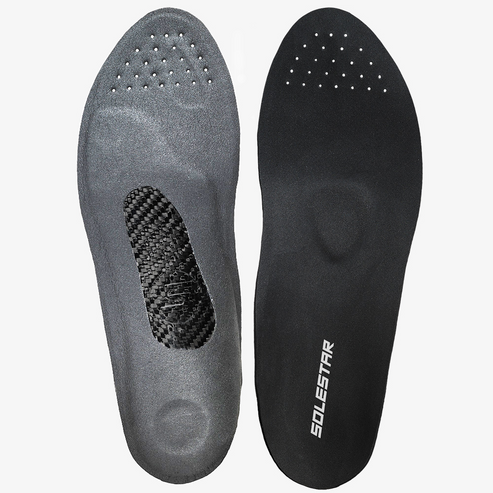
Solestar BLK Wide Insoles
The wide version of the best-selling Solestar BLK cycling insoles. Designed for maximum power transfer, support, and stability during rides. Features carbon core technology and an ergonomic shape for optimal performance and comfort.
Buy nowHow to relieve Tailbone pain after cycling
If you already feel discomfort, the first step is to reduce direct pressure. Rest for a few days and apply cold to the area to reduce inflammation. Adjusting your saddle, height, tilt, and shape—can make a big difference. Strengthening your core and glutes also helps, as a stable pelvis absorbs impacts better and protects your lower back.
The role of proper insoles in pelvic stability
Many cyclists don’t consider their feet when dealing with tailbone pain, but the connection is direct. Proper insoles help stabilize the entire body chain from the ground up, preventing compensations that end up affecting the pelvis.

Controlling foot movement and the upward chain
Good foot control reduces unnecessary movements in the ankle, knee, and hip. This keeps pedaling efficient and symmetrical, reducing torsion on the sacrum and tailbone.
Arch support and ischial alignment
Insoles that support the arches help keep the sit bones properly aligned. This prevents the pelvis from rotating or tilting unevenly, reducing pressure at the base of the spine.
Other recommendations: Saddle, tilt, and technique
-
Proper Saddle: Look for a saddle with a central channel or ergonomic design to relieve pressure on the tailbone.
-
Correct Tilt: A slight forward tilt (1–2°) can relieve pressure at the rear.
-
Pedaling Technique: Maintain smooth cadence and avoid bouncing on the saddle.
- Check Overall Position: Ensure handlebars and saddle height promote a balanced posture.
Tailbone pain while cycling shouldn’t be ignored. With small adjustments to your equipment, technique, and foot support, you can enjoy your rides without discomfort and protect your long-term wellbeing.