How to avoid blisters playing football
Few things can ruin a football match faster than the sting of a blister. Whether you’re sprinting down the pitch or changing direction in a tight space, the constant friction inside your boots can quickly lead to painful skin irritation. Fortunately, most blisters are completely preventable with the right preparation, gear, and care.
What causes blisters during football matches
Blisters occur when your skin rubs repeatedly against your boot or sock. This friction creates heat, which separates the upper layers of the skin and fills the gap with fluid. During an intense match, the combination of quick movements, sweat, and pressure makes your feet especially vulnerable.

How heat, sweat, and friction build up inside the boot
As you play, your feet naturally warm up and produce moisture. Inside a tight football boot, that moisture has nowhere to go, creating a slippery environment. The result? Increased friction and a higher chance of hot spots that turn into blisters. Once the protective layer of your skin breaks down, every step becomes uncomfortable.
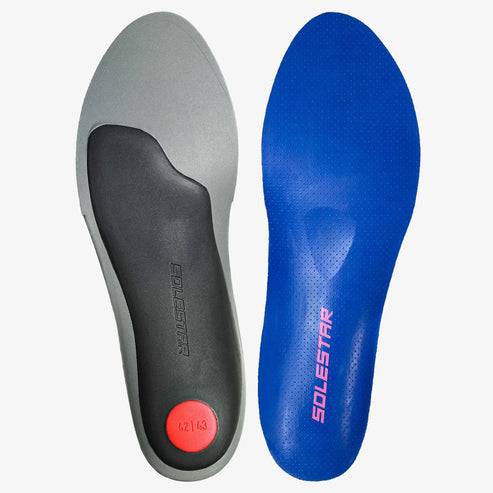
Solestar Kick Soccer Insoles
Insoles designed specifically for soccer players. Enhance control, stability, and overall performance. German-engineered with an ergonomic design to provide maximum support on the field.
Buy now
Smart habits before the game: socks, fit, and moisture control
Preparation starts long before kickoff. Always choose moisture-wicking socks made from synthetic blends or merino wool, never cotton, which traps sweat. Make sure your boots fit snugly but not too tight; too much movement inside the boot is a recipe for friction. Applying anti-blister balm or foot powder before games can also help control moisture and reduce irritation.
Why regular insoles make friction worse
Most standard insoles are not designed with the high-intensity movements of football in mind. They often lack proper grip or stability, causing your foot to slide slightly with every sprint or turn. That small amount of movement adds up, creating friction that leads to blisters, especially around the heel and forefoot.
The SOLESTAR difference: pressure distribution and grip balance
Specialized performance insoles like Solestar KICK can make a big difference. Designed for athletes, they provide even pressure distribution and enhanced foot stability. The result is reduced sliding within the boot and better control during quick changes in direction. By supporting the natural alignment of your feet, Solestar insoles help minimize friction, keeping your skin intact and your performance consistent.

Match-day checklist to stay blister-free all season
Before every match, make it a habit to check these essentials:
- Clean, dry, moisture-wicking socks
- Properly fitted boots (not too loose or tight)
- Anti-friction balm or powder
- Insoles that stabilize and support your feet
- Backup socks for rainy or humid conditions
A few minutes of preparation can save you from weeks of discomfort.
When to replace your boots or insoles to prevent skin irritation
Over time, even the best gear wears out. Worn-down insoles lose their shape and shock absorption, while old boots may develop pressure points or stretched materials that increase friction. As a rule of thumb, replace your football boots every season (or sooner if you play regularly) and your insoles every 6–8 months. Keeping your equipment in top shape is one of the simplest ways to protect your feet.